Neighbourhoods and corridors
Hialeah · Little Havana & Calle Ocho · Flagler Street corridor · Allapattah · Little Haiti · Westchester & Kendall · Doral · North Miami & Miami Gardens · Homestead & Florida City · Sweetwater
Miami has more check cashers, money transfer windows and casas de cambio per square mile than almost anywhere in the United States, serving a customer base that is cash-paid, internationally connected and already asking about crypto.
$500.00
Counter order · Miami
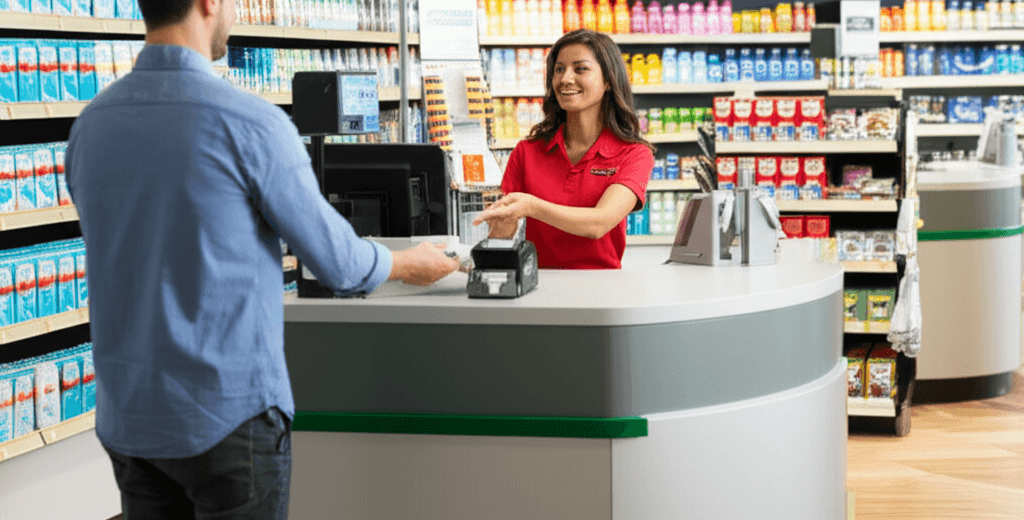
There is no better market in the country for a retail crypto counter than Miami-Dade, and it is not close. The county's cash economy runs on exactly the customer this serves. Paid in cash or by check. Sending money to family in another country. Happier dealing with a person at a counter than with an app that asks for a bank account they may not have.
The retail infrastructure is already there too. The retail is already there. Along Flagler, through Hialeah, across Little Havana, Allapattah and Little Haiti, the stores that cash checks, wire money and sell phone minutes sit on practically every block. Most have already been asked to put a Bitcoin machine inside. This is the alternative to that offer, run from the counter those stores already staff.
On the ground
Check cashers, casas de cambio, money transfer agencies, bodegas and supermercados, phone and unlocking shops, tax preparation offices that open in January and close in May. These are the formats the program was designed around, and the neighbourhoods below are where they cluster.
Hialeah · Little Havana & Calle Ocho · Flagler Street corridor · Allapattah · Little Haiti · Westchester & Kendall · Doral · North Miami & Miami Gardens · Homestead & Florida City · Sweetwater
Check cashers, casas de cambio, money transfer agencies, bodegas and supermercados, phone and unlocking shops, tax preparation offices that open in January and close in May.
Cuba, Venezuela, Colombia, Haiti, Nicaragua, Dominican Republic, Honduras, Brazil — the corridors that drive stablecoin demand at a Miami counter.
Spanish, Haitian Creole, English, Portuguese. Serving a customer in their own language is the single biggest advantage a counter has over an app.
The arithmetic
You keep a share of every order. Bigger order, bigger share. The examples below use 1% to 3% — your own rate is in your agreement.
| At the counter | Order size | Store keeps (low) | Store keeps (high) |
|---|---|---|---|
| A customer cashes a check and puts part of it into Bitcoin | $200 | $2.00 | $6.00 |
| A regular buys USDT to send to family overseas | $500 | $5.00 | $15.00 |
| A customer sells crypto and takes the cash | $1,000 | $10.00 | $30.00 |
| A small business owner buys on payday, every other week | $2,500 | $25.00 | $75.00 |
| One larger order, the kind an ATM's daily cap refuses | $10,000 | $100.00 | $300.00 |
The figures above are worked examples, not projected or guaranteed earnings. They show how the arithmetic works on a given order size at an illustrative revenue-share range. Your actual rate is set in your agent agreement, and what any individual store earns depends on its foot traffic, its neighbourhood, its hours and how many customers it serves. Anytime Capital does not promise any level of income.
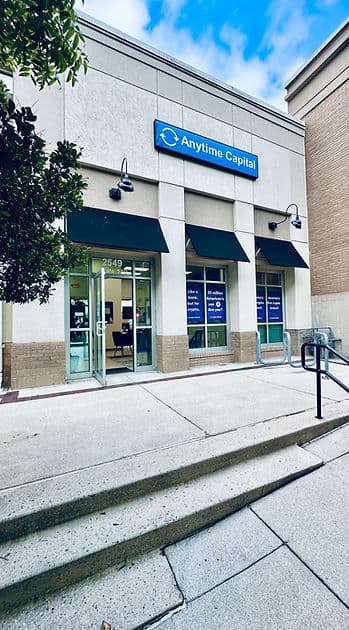

Anytime Capital runs its own branches in Atlanta and Miami. Partner stores run the same counter service.
Anytime Capital operates a Miami branch at 2 Biscayne Boulevard, so the retail team is in the city rather than on the other end of a phone. For a store owner deciding whether to put a new financial service on their counter, being able to meet the people behind it matters more than any deck.
Miami has every condition this needs at once. Heavy foot traffic in cash-paid neighbourhoods. Independent stores, not chains. Families who already send money home. And a population that has been buying crypto at machines for years, and complaining about the price the whole time.
The practical consequence is that a Miami store rarely has to create demand. The customers walk in already knowing what Bitcoin is and already knowing they do not want to pay kiosk prices for it. What they have not had is somewhere with a person behind the counter.
Your employee signs in at retail.anytime-capital.com, verifies the customer once, places the order and takes the payment at the counter. There is no machine to install, no crypto for the store to hold and no float to fund.
Anytime Capital is the registered money services business behind the transaction and carries the customer identification programme, the monitoring and the reporting. Your store is a serving location, and your existing licences remain yours with their own obligations.
Onboarding is a compliance review and a training session. Nothing is delivered to your address, and there is nothing to earn back before the first order is profitable.
Keep reading
The numbers, the rules and the store type closest to yours.
Yes. Anytime Capital operates a branch at 2 Biscayne Boulevard in Miami. Store owners weighing the program are welcome to meet the retail team in person rather than doing the whole thing over email.
It is the opposite of a problem. The single biggest advantage a Miami counter has over a crypto app is that the explanation happens in the customer's own language, from somebody they already know.
Not to act as a serving location for Anytime Capital's platform. Anytime Capital is the registered money services business and carries the compliance programme for the activity. State law varies, so what applies to your specific store is confirmed during onboarding, and nothing here is legal advice.
None. The platform runs in a browser on a phone, tablet or the PC already behind your counter. There is no kiosk, no floor space requirement and no monthly platform fee.
One to two minutes for a first-time customer, because their identity is verified once. Under a minute for everyone after that.
Tell us where the store is and what your customers keep asking for. We will tell you what we can offer at your location.